
Receiving our emails: add us to your contacts

To make sure you receive our emails — important documents, case follow-ups, appointment confirmations — we recommend adding @lacliniquefinanciere.com to your contacts or approved senders list.
To make sure you receive our emails — important documents, case follow-ups, appointment confirmations — we recommend adding @lacliniquefinanciere.com to your contacts or approved senders list.

Robert, 67, from Saguenay, passed away last December. A meticulous man in his professional life — a forestry engineer for 35 years, files always impeccable. But he didn't have a will. And he had never designated a beneficiary on his RRSP.

According to APCIQ's 2025 annual report, the median price of a single-family home in Quebec reached $491,500 — a 67% increase in just five years (source: APCIQ, 2025 annual report).

The government gives you 30 cents for every dollar you set aside for your children's education. Thirty percent in instant government grants, from day one. No investment in the world offers that. Not stocks, not real estate, not cryptocurrencies — nothing beats an instant 30% grant from the federal and provincial governments.

Nearly three out of four Canadians fear running out of money in retirement. This isn't just a feeling — it's what surveys reveal, year after year: 74% according to BMO (2026), 76% according to BMO (2025), 70% according to Scotiabank (2020).

You insure your $400,000 home. Of course. You insure your $35,000 car. Obviously. But do you insure the $60,000-a-year income that pays for that home and that car?
Let's do some simple math. If you earn $60,000 a year and have 25 years left in your career, your earning capacity is worth $1,500,000. A million and a half. Not counting raises, promotions, or bonuses. It's your most valuable asset — and it's probably the one you protect the least.
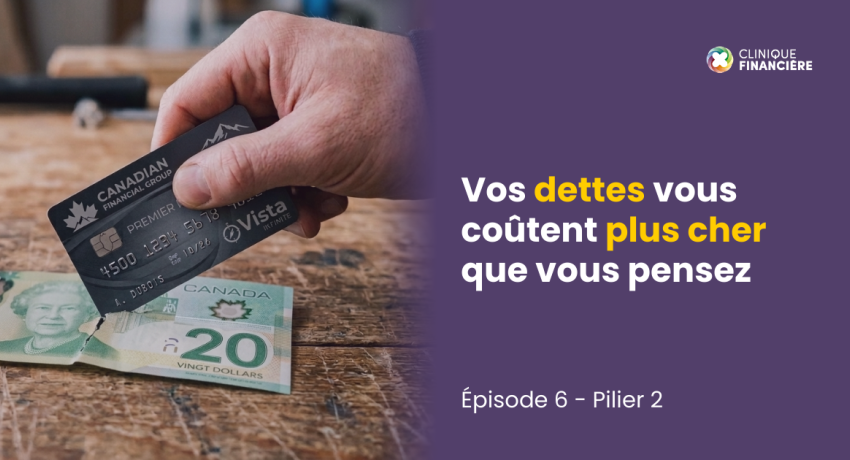
Paying off a credit card debt at 20% is exactly like earning a 20% return on your money. Think about that for a second. Every dollar you pay off on your Visa "earns" you 20 cents per year in saved interest. No legal investment in the world beats that. Not the stock market, not real estate, not Bitcoin, not your cousin's miracle TFSA. Nothing.

Monday morning, 7:12 a.m. Valerie, 34, from Trois-Rivieres, sets down her coffee cup and answers the phone. It's her supervisor. The plant is closing. Permanently. She has three weeks' notice, not a day more.
In her chequing account: $847. Her mortgage: $1,400 per month. Her Visa card is at 92% of its limit. She has no emergency fund. Not a penny set aside to absorb the shock.
March 2020. COVID-19 hits Canada. In three weeks — from February 19 to March 23 — the TSX drops 37% (source: S&P/TSX, Yahoo Finance). Richard, 58, from Quebec City, watches his $250,000 RRSP melt down to $165,000. He panics and sells everything.
On January 25, 2023, the Bank of Canada announced its eighth consecutive policy rate hike, bringing it to 4.50% (source: Bank of Canada, policy rate).